I have a dear friend who is estranged from her adult son. The details of their fracture aren’t necessary to hash out here; suffice it to say, she experiences a grief unlike any other I’ve seen. The loss she feels combined with the clawing hope of reconciliation tears her apart in a variety of ways all the time. It’s painful to watch, agonizing to live, and I wish I could help her heal.
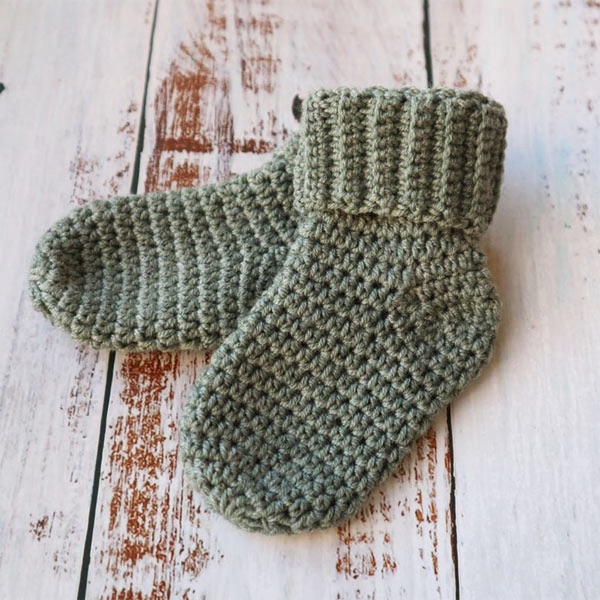
She called me the other day, distraught over a memory. Her son’s birthday just passed, and she’s missing him. Mother’s Day, a day that’s hard for a lot of us to celebrate for a myriad of reasons, was this weekend. She was reminiscing about his childhood when a memory hit her hard: folding her son’s laundry, specifically his socks. From there, it was like a slideshow of trauma playing out in her mind. By the time she called me, she was nearly incoherent with grief.
You see, grief is more than losing someone to death. We grieve failed relationships, lost jobs, even something as small as a lost piece of jewelry. Every aspect of our lives that we value holds the potential for grief.
In some ways, mourning a lost connection and mourning a death are similar. Both deal with a sense of being incomplete. Both suffer the pain of separation. But in other ways, grieving an estranged child hurts in ways that loss parents cannot fathom. When your child is still living in the world but refuses to allow you to participate in their life, there is bereavement. But there’s also an underlying chance at reconciliation. And that slim hope can be intolerably cruel. It keeps you in the moment of loss with no chance of moving forward. You can’t bury someone who’s still alive, and you can’t think about them without being slapped in the face by the stark reality that they’re here, but also absent in your life.
After I got my friend calmed down and we’d discussed how she was feeling, I told her a story about my own small thing that sent me spinning. As a warning, the following story mentions autopsy results.
After Mina died, Armin and I consented to have an autopsy performed on her body. We wanted to know what happened to our daughter. A few months after her death, we got a call from our hospital’s social worker. The autopsy results were in, and we were welcome to meet with our daughter’s care team to go over the results. We packed up the kids and headed to San Francisco, to the hospital where Mina died. When we got there, Armin couldn’t go in the room. He wasn’t ready to see the people who’d cared for our child, and he couldn’t bear to learn what had killed her. So I went in alone. I sat down at a table of people who had watched me suffer the most horrific hours of my life, people who had worked tirelessly to heal my daughter and cried with me when they failed. I braced myself, sure that they would be delivering news that would both heal and destroy me.
Mina’s neonatologist and team of oncologists explained her cancer to me. It started in her right adrenal and spread through her abdomen, affecting her liver, stomach, and kidneys. I sat there listening as my daughter’s death was explained to me. I was told that what happened to her was “bad luck”- a tragic accident of nature. It made a strange sort of sense, and I was thankful for their reassurances that I hadn’t somehow caused Mina’s illness.
But then I looked down at the report in front of me. I ran my eyes down the list of organs. Liver: abnormal. Kidneys: non-functioning. Adrenals: cancerous, stage 4. Ovaries: normal.
Ovaries: normal. That one line stopped me in my tracks. I looked up and asked about Mina’s ovaries. “They were perfect”, her doctor replied. Perfect. And then it struck me: those perfect ovaries were full of eggs. Eggs that someday may have been fertilized. Eggs that could have been my daughter’s children, if only her body had been born healthy. And I was hit with the realization that I hadn’t just lost a daughter, I had lost generations of daughters. I had lost a future of love and giggles and teenage angst and midnight confessions. I had lost the opportunity to watch not just one child grow, but generations of them.
The magnitude of that loss took months to really settle in. I still struggle with the idea of what could have been some days. If our luck had held out a little longer, would she have had a chance? If I’d done something different, gotten help sooner, could Mina have survived? If my friend says the right thing, will her son allow her back into his life? Can she undo past damage with acts of service so that she has a chance to know her son again? To know his partner and his future children? These are the questions that keep parents like us up at night, clawing at the darkness and raging against the injustice of it all.
Socks are socks and ovaries are ovaries. In the grand scheme of things, these small details matter to no one but us. My friend’s son has long outgrown the socks she remembered, and they’re likely in a landfill somewhere. Mina may have chosen not to have children, or she may have been unable to. I’ll never know. But for parents who grapple with all the things they’ve lost, the details- things like socks and ovaries- can become an overwhelming symbol of all that’s slipped from our grasp. And sometimes it’s easier to grieve those small details than it is to face the magnitude of our losses. We break down our mourning into manageable, bite-size chunks to chew on like bitter taffy, swallowing them down and hoping we don’t choke. Sometimes it’s easier to look at our grief peripherally instead of facing it head on. When the little details symbolize the big losses, they become cemented in our memories- placeholders for our love and our anguish. And so socks become a symbol for a love that radiates with no place to land, and ovaries are a small token of what could have been, if only.

 Missing Mina
Leave a comment